

What Is Preimplantation Genetic Testing (PGT)?
PGT-A, PGT-M and PGT-SR Explained
If you are going through IVF, you may hear your fertility team discuss preimplantation genetic testing, often shortened to PGT. PGT allows an IVF laboratory and genetics team to learn specific genetic or chromosomal information about an embryo before an embryo transfer.
There are several types of PGT, and they answer different questions. Understanding the difference between PGT-A, PGT-M and PGT-SR can make conversations about embryo testing much easier to follow.
What Is Preimplantation Genetic Testing?
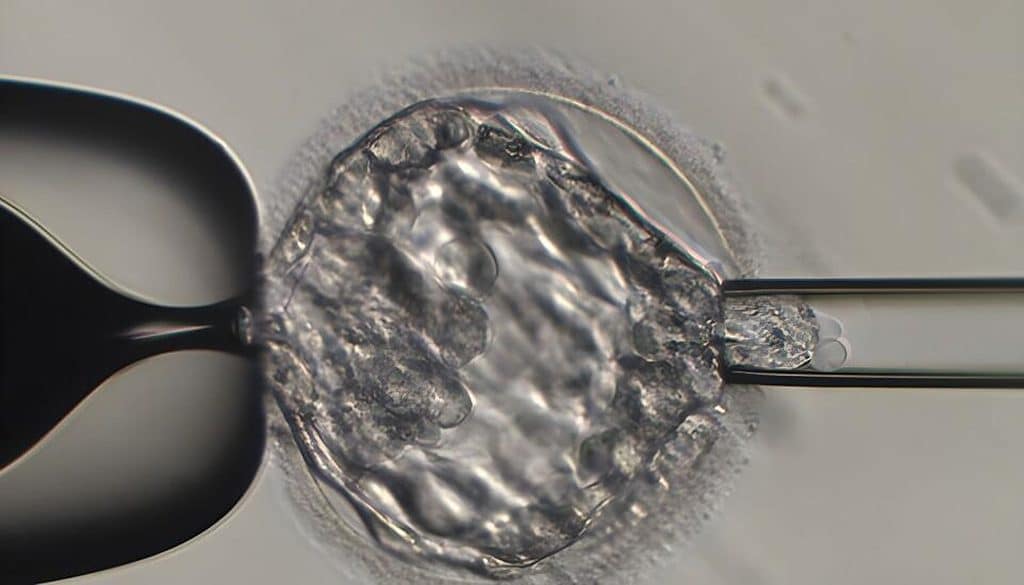
Preimplantation genetic testing (PGT) is genetic testing performed on embryos created through in vitro fertilization (IVF). After an embryo develops to the blastocyst stage, usually around day 5, 6 or sometimes 7, a small number of cells can be removed from the trophectoderm, the outer layer of cells that will contribute to the placenta.
Those cells are sent to a specialized genetics laboratory for analysis. The embryo itself is typically cryopreserved while results are pending. The results can then provide additional information for the fertility team and patient when planning a future frozen embryo transfer.
What Are the Three Main Types of PGT?
The three commonly discussed forms of preimplantation genetic testing are PGT-A, PGT-M and PGT-SR. Although all involve testing cells from an embryo, each is designed to evaluate something different.
PGT-A: Preimplantation Genetic Testing for Aneuploidy
PGT-A evaluates the number of chromosomes in the sampled cells. An embryo with the expected number of chromosomes is generally described as euploid. An embryo with an abnormal number is described as aneuploid. Testing may also produce other results, including mosaic or inconclusive findings.
Because chromosome abnormalities become more common with increasing maternal age, PGT-A may be discussed with some IVF patients as one piece of the embryo-selection process. It is important, however, to understand its limitations. The American Society for Reproductive Medicine (ASRM) states that the value of routine PGT-A for every patient undergoing IVF has not been demonstrated.
PGT-M: Preimplantation Genetic Testing for Monogenic Disorders
PGT-M is designed for families with a known risk of passing on a condition caused by a specific gene variant. Examples can include conditions such as cystic fibrosis, Huntington disease and many other inherited disorders.
PGT-M is highly individualized. A genetics laboratory typically reviews the family’s specific genetic findings and develops a testing strategy before the IVF cycle begins. Results can help identify which embryos are predicted to be affected, unaffected or, when relevant to the inheritance pattern, carriers of the condition being tested.
PGT-SR: Preimplantation Genetic Testing for Structural Rearrangements
PGT-SR is used when a parent carries certain structural chromosome rearrangements, such as a balanced translocation or inversion. A person with a balanced rearrangement may be healthy but can produce eggs or sperm with an unbalanced amount of chromosome material. This can contribute to infertility, miscarriage or an affected pregnancy.
PGT-SR can help identify embryos with chromosome findings considered suitable for transfer based on the specific rearrangement being evaluated.
How Is an Embryo Biopsy Performed for PGT?
PGT usually takes place after an embryo reaches the blastocyst stage. An embryologist carefully removes a small sample of cells from the trophectoderm using specialized micromanipulation equipment. The inner cell mass, which develops into the fetus, is not the intended biopsy target.
After the biopsy, the embryo is typically vitrified, or rapidly frozen, while the biopsied cells are analyzed by the genetics laboratory. Once results are available, the fertility team can review them with the patient and discuss next steps.
Does PGT Guarantee a Healthy Baby?
No. PGT provides valuable information, but it cannot guarantee implantation, pregnancy or the birth of a healthy child. A biopsy tests a small sample of cells, and every form of genetic testing has limitations. Results can also include mosaic, inconclusive or other findings that require additional counseling.
Patients who become pregnant after PGT should still discuss recommended prenatal screening and diagnostic testing with their obstetric and genetics teams. PGT does not replace routine prenatal care.
Does PGT-A Improve IVF Success Rates?
This question requires some nuance. PGT-A can provide chromosome information that may help prioritize embryos for transfer in certain situations, but it has not been shown to improve the cumulative live-birth rate for every IVF patient. ASRM does not recommend routine PGT-A for all patients undergoing IVF.
Whether PGT-A may be useful depends on the individual situation, including age, reproductive history, the number of embryos available, treatment goals and other clinical factors. Your fertility team can explain why PGT-A may or may not be recommended in your particular IVF cycle.
What Is the Difference Between Embryo Grading and PGT?
Embryo grading and PGT evaluate different things. Embryo grading describes how an embryo looks and how it has developed under the microscope. PGT evaluates specific genetic or chromosomal information from biopsied cells.
A beautifully graded embryo is not necessarily chromosomally normal, and a lower morphological grade does not automatically mean an embryo has a genetic abnormality. When both types of information are available, they may be considered together when planning an embryo transfer.
The Bottom Line
Preimplantation genetic testing can provide important information about embryos created during IVF, but the reason for testing matters. PGT-A evaluates chromosome number, PGT-M is used for specific single-gene conditions, and PGT-SR evaluates certain structural chromosome rearrangements.
PGT is not necessary or appropriate for every IVF patient. If genetic testing is being considered as part of your treatment, your fertility team can help you understand what type of testing is being discussed, what information it can provide and what its limitations are.
Clinical Sources
American Society for Reproductive Medicine (ASRM). The use of preimplantation genetic testing for aneuploidy: a committee opinion (2024)